logo
  • Home
  • Investor Insight
  • Market Moves
  • Global Economy
  • Finance Radar
  • Money Matters
  • Trade&Trends
logo
search
search
Category:

Market Moves

  • Global Economic Signals Explained
    Market Moves

    Global Economic Signals Explained

    2025-12-13

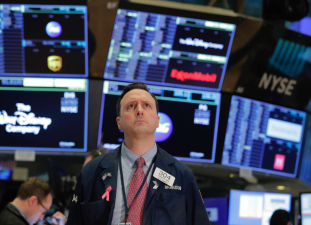
    From late July to mid-August, major economies around the world released their first-half economic data, revealing that the global economy is struggling amid multiple challenges. On the one hand, the US tariff war has disrupted the global trade order, weakened global economic growth momentum, and become the biggest "risk source" dragging down the world economy. On the other hand, strengthening cooperation to address these challenges has become a consensus, with many economies focusing on optimizing their economic structures, promoting trade diversification, and strengthening regional cooperation to help the global economy develop greater resilience. Global economic growth is projected to be 3.0% and 3.1% in 2025 and 2026, respectively, an upward revision from the April 2025 World Economic Outlook forecast. This reflects the front-loading effect of imports and exports before tariffs are implemented, the reduction in effective tariff rates, improved financial conditions, and fiscal expansion in some major economies. Global inflation is expected to decline, but US inflation is expected to remain above target levels. Downside risks from potential higher tariffs, rising uncertainty, and geopolitical tensions persist. Restoring confidence and improving predictability and sustainability remain key policy priorities.
  • Are Economic Trends Accelerating or Slowing?
    Market Moves

    Are Economic Trends Accelerating or Slowing?

    2025-12-11

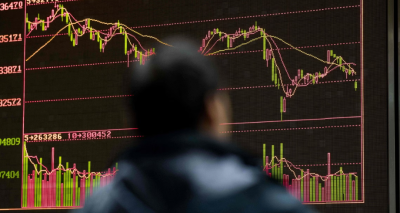
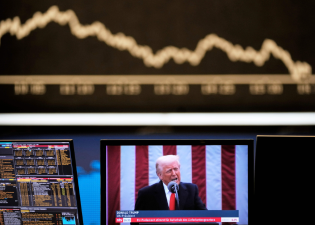
    2025 is drawing to a close, and the uncertainties that plagued us at the beginning of the year have become certainties. However, standing at the end of 2025, we remain filled with confusion and doubt about the global economic trajectory in 2026. Yes, time is the best way to dispel uncertainty, but as long as there is a future, uncertainty will always exist. The global economy has not fully fallen into recession, but the recovery has been weak and of low quality, making it vulnerable to external shocks. The report predicts that global economic growth will further slow to 2.6% in 2025, a decline from 2.9% in 2024. The momentum of global economic growth continues to weaken, with a slowdown in growth: from 3.3% in 2024 to 3.2% in 2025, and then to 3.1% in 2026. This series of downward adjustments clearly indicates that the retaliatory rebound after the COVID-19 pandemic has ended, and the global economy is returning to a lower growth trajectory. Behind this is the combined effect of the lagged effects of monetary policy tightening in major economies, debt pressures, and structural problems such as slowing productivity growth.

  • What Are Global Markets Telling Us?
    Market Moves

    What Are Global Markets Telling Us?

    2025-12-10

    Despite the unpredictable trade war, critical mineral shortages, and tensions between the US and China, the global economy has been tossed around like a ball, demonstrating resilience beyond expectations. However, now is not the time to relax. The economic vortex shows no signs of abating. “We are experiencing an extremely turbulent era,” global markets are revealing future trends through three core signals: differentiation is replacing globalization as the new rule, AI and policy stimulus are dominating asset pricing, and supply chain security takes precedence over efficiency. These signals all point to one conclusion: traditional linear thinking is no longer effective, and investors and businesses need to develop survival strategies for a non-linear world.

  • Market Sentiment: Fear or Opportunity?
    Market Moves

    Market Sentiment: Fear or Opportunity?

    2025-12-08

    Recent global financial market sentiment indicators have shown significant divergence. Analysis of the fear and greed data of nine core indices reveals that the A-share market is generally in a state of extreme greed, with the Shanghai Composite Index, CSI 300, ChiNext Index, and STAR Market Composite Index all exceeding 90, indicating highly optimistic investor sentiment. The Hong Kong stock market is relatively moderate, with the Hang Seng Tech Index and Hang Seng Index in neutral and near-neutral states, respectively. The US stock market shows a clear divergence, with the S&P 500 in the fear zone, the Dow Jones Industrial Average showing greed characteristics, and the Nasdaq 100 exhibiting extreme fear. This divergence suggests that global markets may be facing a significant style shift, and investors need to be wary of the volatility risks brought about by extreme sentiment.

  • How to View The Global Capital Flow?
    Market Moves

    How to View The Global Capital Flow?

    2025-12-07

    Against the backdrop of an increasingly complex global economic landscape, we have noticed a growing number of investors fleeing the US financial markets, leading to unprecedented challenges for dollar assets. Capital flows are a crucial and closely watched issue in the global economy. Understanding and discerning capital flows is of great significance for investors and financial professionals. It not only helps us grasp market dynamics but also provides a reference for investment decisions. Over the past few decades, globalization has accelerated, and cross-border capital flows have become one of the main characteristics of the world economy today. How should we view the current global changes amidst the undercurrents of capital and the foreshadowing of the times?

  • How Profits Are Made in Market Shifts
    Market Moves

    How Profits Are Made in Market Shifts

    2025-12-07

    When market demand for a company's products or services increases, the company's sales will rise accordingly, leading to profit growth. For example, as people become more health-conscious, the demand for fitness equipment and health foods continues to increase, and the profits of related companies also grow. Conversely, if market demand declines, a company's sales and profits may be negatively affected. Cost control is another key factor affecting profits. A company's costs include production costs, sales costs, and management costs. In the financial fund sector, profit is a core concept, reflecting the operating results and profitability of a company or investment project. Simply put, profit is the operating result of a company during a specific accounting period; it is the remaining amount after deducting costs and expenses from revenue. It is an important indicator for measuring a company's economic efficiency and market competitiveness, and a key basis for investors to assess company value and investment returns. Profit is crucial for a company's survival and development. In the short term, sufficient profit can guarantee the company's daily operations, pay employee salaries, and repay debts. In the long term, sustained profit growth can support activities such as expanded reproduction, research and development innovation, and market expansion, enhancing the company's core competitiveness and market position. For investors, profit is a crucial factor determining investment returns. Increased corporate profits typically drive up stock prices, resulting in capital gains for shareholders. Simultaneously, companies may distribute a portion of their profits as dividends, providing cash returns.

  • Reading Global Markets Through Data
    Market Moves

    Reading Global Markets Through Data

    2025-12-06

    With rapid globalization, businesses are increasingly aware that their market strategy deployment directly impacts their competitiveness in the global market. In this process, data comparative analysis has become a crucial tool supporting market strategy deployment, helping companies understand market dynamics, the competitive environment, and consumer behavior. While many companies have begun to recognize the importance of data, they still face the challenge of how to efficiently utilize this data to optimize their market strategies. In the digital age, access to accurate and timely data is essential for companies looking to maintain a competitive edge. Among the abundant available data, global trade data has become a key resource for companies aiming to expand their business scope and improve strategic decision-making. But how can you effectively utilize this data?

  • What Do Market Signals Really Mean?
    Market Moves

    What Do Market Signals Really Mean?

    2025-12-05

    Market signals refer to indirect information conveyed by competitors through specific actions. These signals may reflect genuine strategic intentions, or they may contain bluffing or warnings, encompassing various forms such as action trends and internal feedback. This concept was introduced into economic analysis by Michael Spence in 1973. These signals have a dual function: they can convey a competitor's true motives and serve as a means of strategic deception. Typical applications include viewing postgraduate entrance exams as a competitive signal in the job market, and subsequent scholars' expansion into areas such as supply chain finance signals and venture capital decisions. Market signals and market information are crucial concepts in economics; they reveal the essence of the market and help people better understand and solve economic problems. In the field of fund investment, understanding market signals is essential, helping investors grasp market dynamics and make more rational investment decisions. Market signals refer to various indications in financial markets that reflect market trends, investor sentiment, and macroeconomic conditions. These signals can come from multiple sources, including macroeconomic data, policy changes, company financial statements, and market transaction data.

  • Where Is Global Capital Flowing?
    Market Moves

    Where Is Global Capital Flowing?

    2025-12-03

    International capital flows refer to the transfer of capital between different countries or regions, also known as international capital transfers. They are categorized by direction as capital inflows and outflows, and by duration as long-term (including direct investment, portfolio investment, and international credit) and short-term (including trade finance flows and arbitrage flows). Their causes include cross-border profit-driven factors, exchange rate fluctuations, and political risks. This flow is characterized by the compensated transfer of usage rights; international capital inflows and outflows essentially represent increases and decreases in foreign assets and liabilities. Since the 1990s, international capital flows have gradually replaced international trade as the main driving force of global economic development. In recent years, they have shown a trend towards short-term and financialized flows, with shorter portfolio investment cycles. Cross-border bank claims exhibit a clear short-term characteristic.

  • Where Are Global Markets Headed Next?
    Market Moves

    Where Are Global Markets Headed Next?

    2025-12-01

    Looking back at 2024, the global economy struggled along its slow recovery path, exhibiting a complex landscape characterized by insufficient momentum, unbalanced growth, and increasing fragmentation. On the one hand, escalating geopolitical conflicts and the spread of unilateralism and protectionism cast a shadow over the prospects for global growth. On the other hand, international trade showed some signs of recovery, and rapid technological advancements in fields such as artificial intelligence and new energy gave rise to numerous new industrial forms and business models, driving the transformation of traditional industries towards digitalization and greening, and injecting a continuous stream of new impetus into economic growth. The global economy is facing strong headwinds, primarily due to escalating trade tensions and rising global policy uncertainty. For emerging market and developing economies (EMDEs), the bleak outlook has hampered their ability to promote job creation and reduce extreme poverty. Weak foreign direct investment in EMDEs further complicates this challenging environment. Global cooperation is needed to restore a more stable global trade environment and expand support for vulnerable countries, including those in fragile and conflict-ridden situations. Domestic policy measures are also crucial for curbing inflation risks and enhancing fiscal resilience. To unlock the potential for job creation and long-term growth, reforms should focus on improving institutional quality, attracting private investment, and strengthening human capital and the labor market.

  • Economic Signals & Trend Insights
    Market Moves

    Economic Signals & Trend Insights

    2025-11-30

    In 2025, the global economy underwent an unprecedented structural transformation. Against the backdrop of persistent short-term disturbances, increased long-term uncertainty, and the deepening structural changes, the global economic growth outlook remains challenging. Simultaneously, regional differentiation and technological innovation are jointly altering growth patterns. The trend of geoeconomic fragmentation is becoming increasingly apparent, new technologies such as artificial intelligence bring numerous uncertainties, and the significant differences in growth paths across regions are severely challenging the old global economic order, while a new order is still under construction. Global economic growth is projected to be 3.0% and 3.1% in 2025 and 2026, respectively, an upward revision from the April 2025 World Economic Outlook forecast. This reflects the pre-implementation effects of tariffs, the reduction in effective tariff rates, improved financial conditions, and fiscal expansion in some major economies.

  • Why Are Markets So Volatile Right Now?
    Market Moves

    Why Are Markets So Volatile Right Now?

    2025-11-30

    In 2025, global stock markets continued to fluctuate, with A-shares, US stocks, and Hong Kong stocks all experiencing varying degrees of volatility. Investors are generally concerned about: Why the recent stock market volatility? What are the key factors behind the market fluctuations? Faced with uncertainty, how should retail and institutional investors adjust their strategies? This article will analyze the reasons for the current stock market volatility from multiple perspectives, including macroeconomics, policy adjustments, market sentiment, and capital flows, and provide practical investment advice to help investors seize opportunities and avoid risks in a volatile market. Volatility is a common phenomenon in financial markets. The reasons for market volatility are diverse, and a deep understanding of these reasons is crucial for investors to formulate effective coping strategies.

  • How Do Economic Signals Shape Trends?
    Market Moves

    How Do Economic Signals Shape Trends?

    2025-11-30

    Economic signals are key indicators reflecting the state of economic activity, guiding economic trends by influencing the expectations and behaviors of market participants. The following content is AI-generated and for reference only. Economic signals are the core driving force influencing market trends, and their mechanism can be summarized as a transmission chain of signal → expectation → behavior → trend. Economic signals change market participants' expectations, thereby affecting their investment, consumption, and production decisions, ultimately forming market trends. In the vast ocean of financial markets, economic data acts as a guiding lighthouse, exerting a profound and complex influence on market trends. However, this influence is not a fixed, deterministic path, but rather fraught with uncertainty.

  • What Does the Data Say About Markets?
    Market Moves

    What Does the Data Say About Markets?

    2025-11-29

    In today's business environment, data is not merely an asset, but a powerful tool. Through proper data collection, analysis, and interpretation, businesses can better understand market trends and identify opportunities. This article delves into the concepts, methods, and tools of market trend analysis, and how to leverage data to uncover new business opportunities. The release of economic data is closely watched by investors. However, the extent to which they provide valuable information remains unclear. Official statistical bureaus around the world often attempt to capture economic reality through a range of measures, from unemployment rates and GDP to confidence indices and housing starts. Financial markets are considered to reflect this hypothetical reality in the form of asset prices. In-depth analysis of marketing data can help businesses understand consumer needs, grasp market trends, and optimize resource allocation, thereby improving marketing effectiveness and market share.

  • Economic Trends at a Glance
    Market Moves

    Economic Trends at a Glance

    2025-11-21

    The "Global Economic Situation and Prospects Mid-Year Update 2025" is a report released by the United Nations on May 15, 2025. The report predicts that global economic growth will slow to 2.4% in 2025 from 2.9% in 2024, primarily due to increased tariffs and trade policy uncertainty exacerbating supply chain pressures, leading to a decline in business investment. Global trade growth is expected to plummet from 3.3% in 2024 to 1.6% in 2025, with merchandise trade likely to contract in the second half of the year, but digitalization will drive resilience in services trade. Developing countries face multiple challenges, including reduced exports, declining commodity prices, tighter financing conditions, and increased debt burdens. Weak global growth further hinders the achievement of Sustainable Development Goals and limits investment in the green transition. Global inflation is expected to be 3.6%, with supply chain disruptions and climate change pushing up prices. The job market is undergoing structural adjustments due to the economic slowdown, and the rapid adoption of generative artificial intelligence may bring about a new round of employment structure changes. Investment and financial markets are volatile due to escalating trade frictions, threatening the financing capabilities of developing countries. The report recommends a comprehensive approach using a combination of monetary, fiscal, supply-side, and industrial policies to address challenges, and emphasizes the crucial role of policy coordination and international cooperation in stabilizing the global economy.

Popular Posts

  • What Trade Data Reveals About the Global Economy

    What Trade Data Reveals About the Global Economy

  • How Geopolitics Is Changing Trade Flows

    How Geopolitics Is Changing Trade Flows

  • How Geopolitics Is Reshaping the Economy

    How Geopolitics Is Reshaping the Economy

  • Tracking Goods and Capital Across Borders

    Tracking Goods and Capital Across Borders

  • Financial Indicators That Matter Before Trends

    Financial Indicators That Matter Before Trends

About Us

Privacy Policy

Term Of Use

Copyright © 2025 Sound Finance. All rights reserved.

logo
  • Home
  • Investor Insight
  • Market Moves
  • Global Economy
  • Finance Radar
  • Money Matters
  • Trade&Trends
  • About Us
  • Privacy Policy
  • Term Of Use